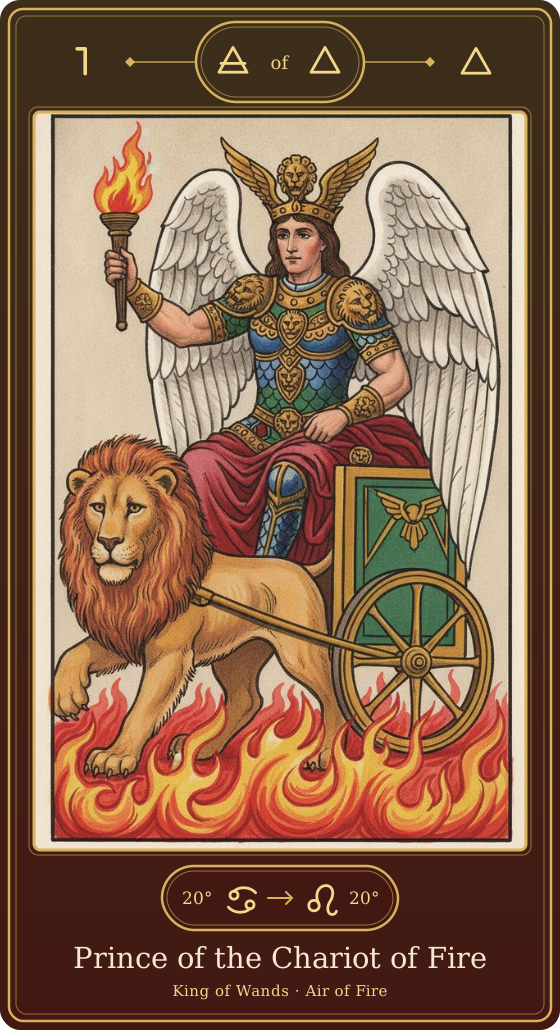
Book T no. 7 · King of Wands · Air of Fire
Prince of the Chariot of Fire
King of Wands · The Prince of the Chariot of Fire
Read to know yourself, not to surrender yourself: relate to the card; never obey it.
Book T (1912)
A KINGLY Figure with a golden, winged crown, seated on a chariot. He has large white wings. One wheel of his chariot is shewn. He wears corslet and buskins of scale armour decorated with a winged lion's head, which symbol also surmounts his crown. His chariot is drawn by a lion. His arms are bare, save for the shoulder-pieces of the corslet, and he bears a torch or fire-wand, somewhat similar to that of the Zelator Adeptus Minor. Beneath the chariot are flames, some waved, some salient.
Swift, strong, hasty; rather violent, yet just and generous; noble and scorning meanness.
He rules the heavens from above the last Decan of Cancer to the second Decan of Leo; hence he includes most of Leo Minor.
Air of Fire
Prince and Emperor of Salamanders.
Book T as printed in The Equinox I(8), 1912, public domain (notes in square brackets are Crowley's).
If ill dignified
Book T (1912): its words for the card when it falls ill dignified, set apart from its text
If ill dignified — cruel, intolerant, prejudiced and ill natured.
In Book T's table
No. 7 of Book T's 78 titles · Prince of Wands (the 1912 list calls it the King of Wands) · Air of Fire
Correspondences
Rules 20° Cancer – 20° Leo. As Air of Fire, this court is the air aspect of an ardent and swift suit.
Waite, Pictorial Key (1911)
A. E. Waite, a member of the Golden Dawn, in The Pictorial Key to the Tarot (London, 1911) · public domain · he describes the Rider-Waite-Smith picture of this card, not Book T's
The physical and emotional nature to which this card is attributed is dark, ardent, lithe, animated, impassioned, noble. The King uplifts a flowering wand, and wears, like his three correspondences in the remaining suits, what is called a cap of maintenance beneath his crown. He connects with the symbol of the lion, which is emblazoned on the back of his throne. Divinatory Meanings : Dark man, friendly, countryman, generally married, honest and conscientious. The card always signifies honesty, and may mean news concerning an unexpected heritage to fall in before very long. Reversed : Good, but severe; austere, yet tolerant.
Picture sets
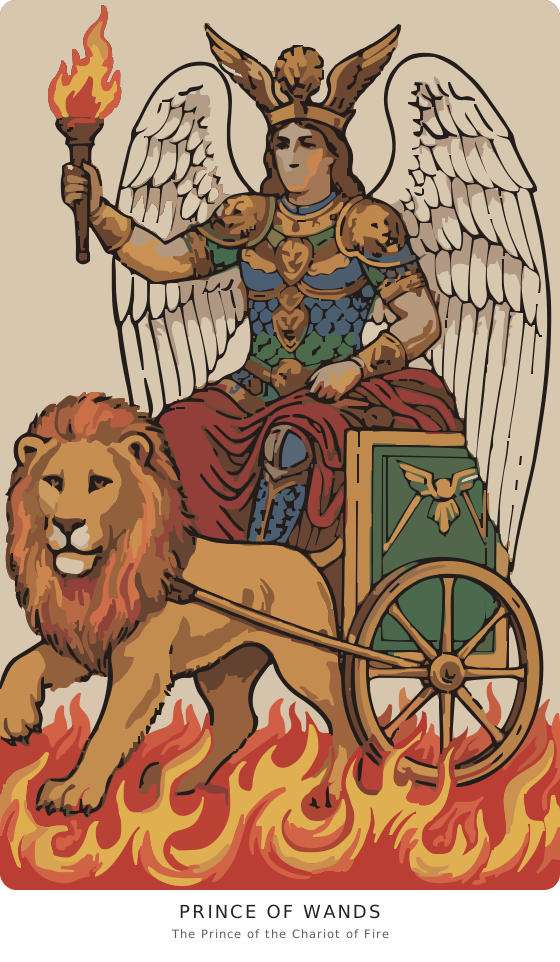 Book T deck, SVG. PlayfulProcess (line art traced from the AI painting). CC-BY-SA-4.0.
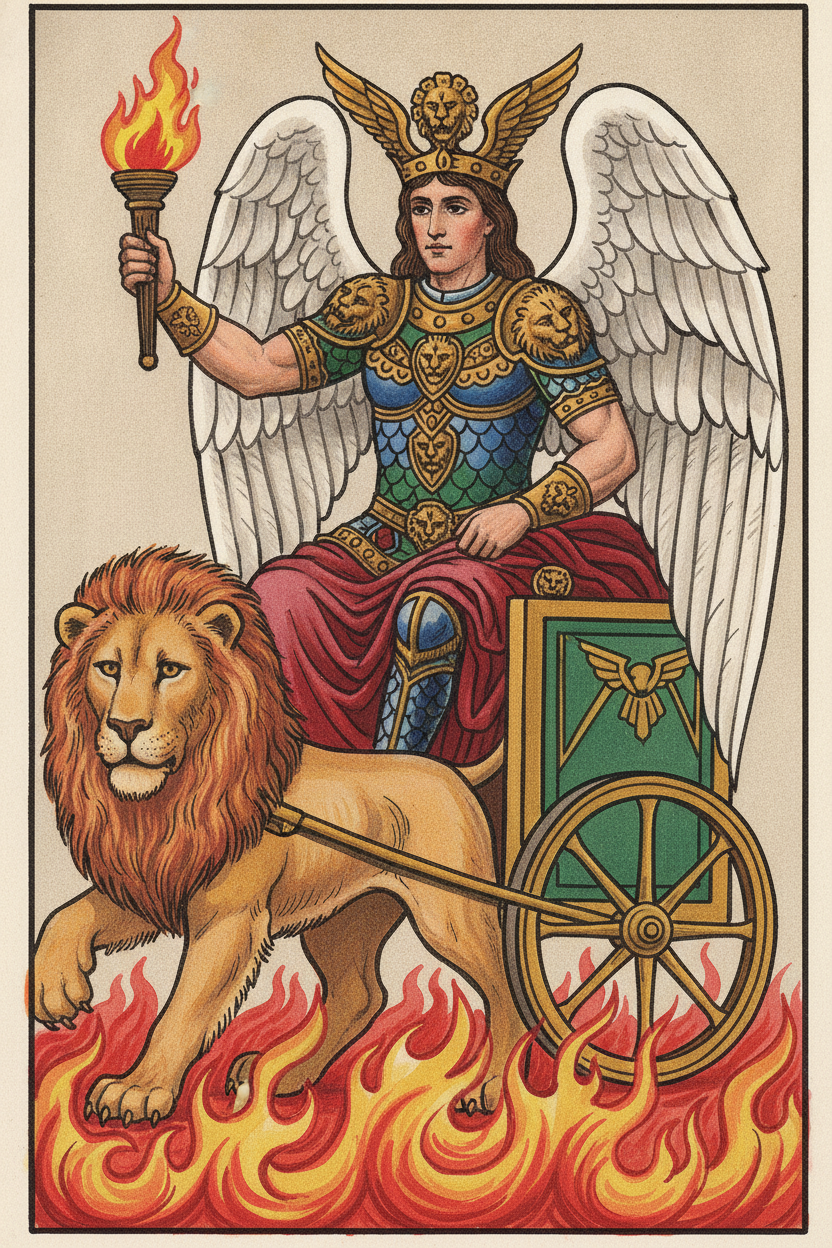 Book T deck, painting. AI painting (gemini-2.5-flash-image) from Book T's words, prompt by PlayfulProcess. CC-BY-SA-4.0.
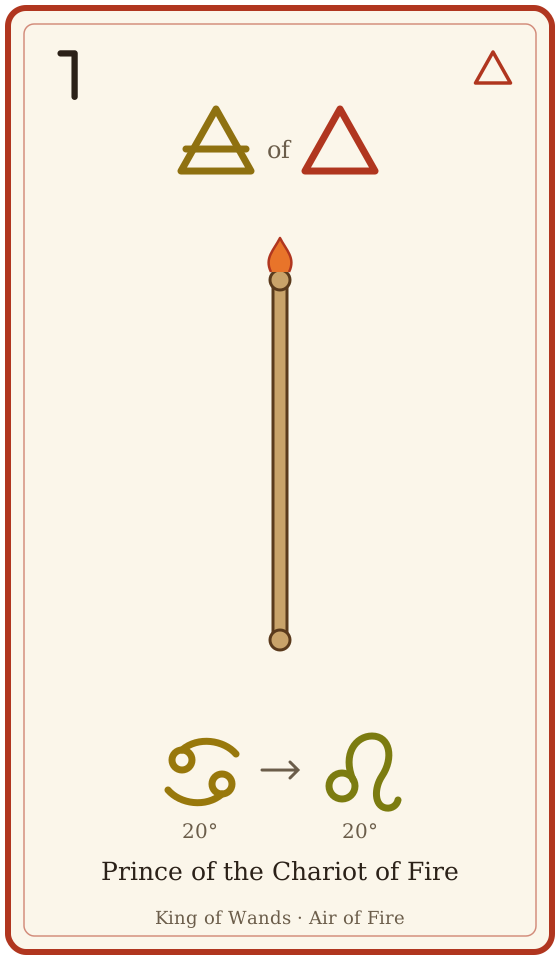 Book T deck, iconography. PlayfulProcess: glyphs drawn for this deck, composed by script (scripts/build_book_t_iconography.py) from the card's own metadata, placed as Book T (1912) places them. CC-BY-SA-4.0.
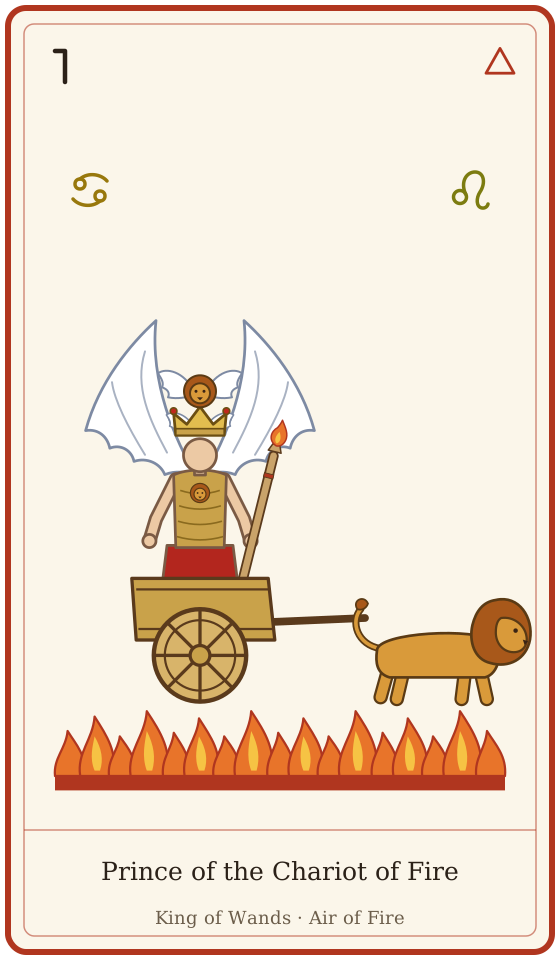 Book T deck, full imagery. PlayfulProcess: parts drawn for this deck (tarot/book-t/parts, tarot/book-t/glyphs), composed by script (scripts/build_book_t_full_imagery.py) from a spec per card that follows Book T (1912). CC-BY-SA-4.0.
 Book T deck, linocut. PlayfulProcess: a linocut printing of the full imagery, composed by script (scripts/build_book_t_linocut.py) from the same spec per card, which follows Book T (1912). CC-BY-SA-4.0.