c. 1450–80 · Florentine — workshop of Apollonio di Giovanni & Marco del Buono (current BnF attribution)
The 'Charles VI' Tarot (Gringonneur) — c. 1450–1480
At a glance
Seventeen surviving hand-painted cards (sixteen trumps and a page) held at the Bibliothèque nationale de France, historically — and wrongly — said to be French cards painted in 1392 for King Charles VI. They are in fact Italian, c. 1450–80, and a key witness to the B-order (Ferrarese) trump sequence. A textbook case of a name preserving an exploded myth.
Origin & dating
The legend comes from a real account-book entry: a 1392 payment to Jacquemin Gringonneur for three gilded card packs for Charles VI of France. Nineteenth-century writers attached that entry to these cards. But the surviving deck is a Northern Italian product (Ferrara or possibly Florence), dated to roughly 1450–1480 — about a century too late to be Gringonneur's. The names "Charles VI" and "Gringonneur" survive only as labels of convenience.
Provenance & evidence
17 cards in the BnF (16 trumps + the Page of Swords), hand-painted and gilded. Style and iconography place it in the Ferrarese orbit; its trump order is the main reason it matters — this library places it in the B-order that Dummett distinguishes from Bologna's A-order and Milan's C-order, but the classification is genuinely debated: the cards carry no numerals, and Dummett's own later analysis (Il Mondo e l'Angelo) argued the sequence is actually closer to the southern A-order, despite the Ferrarese style. It is genuinely debated in the literature.
Game or divination?
Game. No cartomantic use; the divinatory association is, again, a post-1781 import.
The fear question
No fear. A gilded court object of the same luxury class as the Visconti decks. The only "deception" in its history is scholarly, not social — the mis-dating, not any hidden practice.
Counter-voices
The bogus 1392 French date was itself an early piece of mythmaking that made tarot look older and more mysterious than it is — a reminder that romantic over-dating (toward Egypt, toward medieval France) has repeatedly run ahead of the documents. Correcting it is not "suppressing" an occult past; it is removing a 19th-century embellishment.
Open questions / corrections owed
- Ferrara vs. Florence origin is unresolved; date range c.1430s–1470s is still argued.
- The deck is a fragment; the full original trump set is reconstructed, not observed.
Sources & further reading
- "The Fifteenth-Century Charles VI Deck Recreated," Tarot Heritage.
- trionfi.com, "Origin of Tarot" notes on the Gringonneur entry.
- Dummett, The Game of Tarot (1980), on A/B/C orders.
RESEARCH NOTE (2026-06-13) — attribution debate. This catalogue follows the older Dummett classification (Ferrarese / B-order). Newer scholarship (BnF Catalogue général) attributes the deck to the Florentine workshop of Apollonio di Giovanni & Marco del Buono (c. 1460), an A-leaning sequence (all virtues below Death). Genuinely debated — both views are live. Also: 16 trumps + 1 Page of Swords = 17 surviving cards (not 17 trumps). See research/decks/charles-vi-tarot.md.
EDITORIAL CALL (2026-06-13): attribution set to Florentine (Apollonio di Giovanni & Marco del Buono workshop, c. 1450–70) per the current BnF Catalogue général; the trump-ORDER (A vs B) remains genuinely contested, so the genealogy branch is left unchanged pending a tree review.
Where the pictures come from: who holds this deck's pictures, how sharp they are and what their rights allow: Sources: 'Charles VI' (Ferrara).
The cards (17)
These pictures are 1844 lithographic copies of the cards, not photographs of the cards. Drawn in line after the originals for Jeux de cartes tarots et de cartes numérales du quatorzième au dix-huitième siècle (Société des bibliophiles français, Paris: Crapelet, 1844), plates 2 to 18; scanned from the copy at the Université de Liège, Réseau des Bibliothèques (DONum), XIX.052.005 (hdl.handle.net/2268.1/15344, filed public domain). Each card links to the original at the Bibliothèque nationale de France, Paris (Cabinet des Estampes), on Gallica.
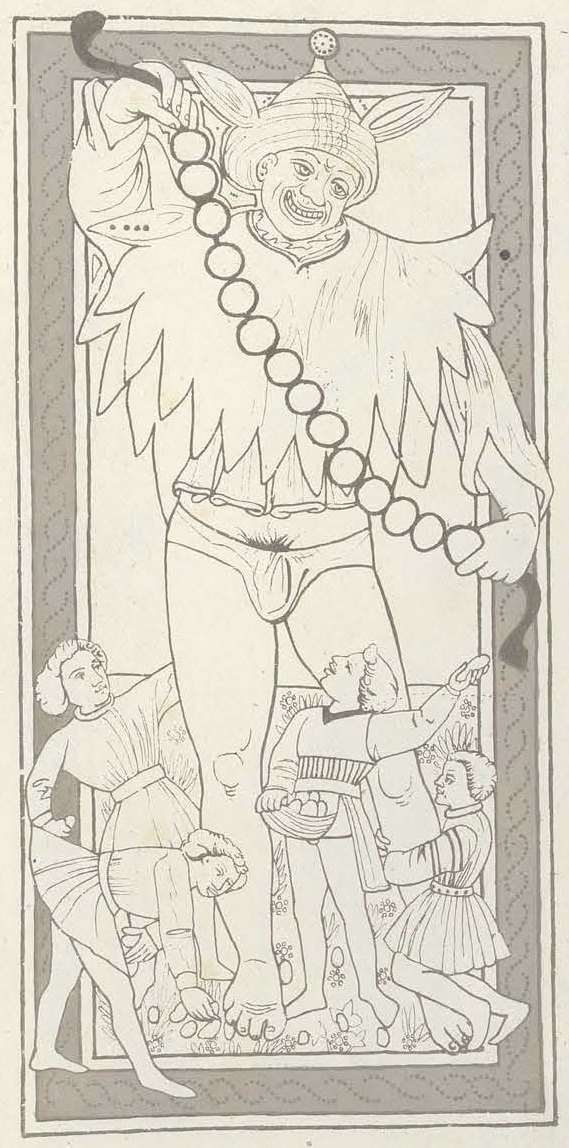 0 — The Foolthe card itself at the BnF
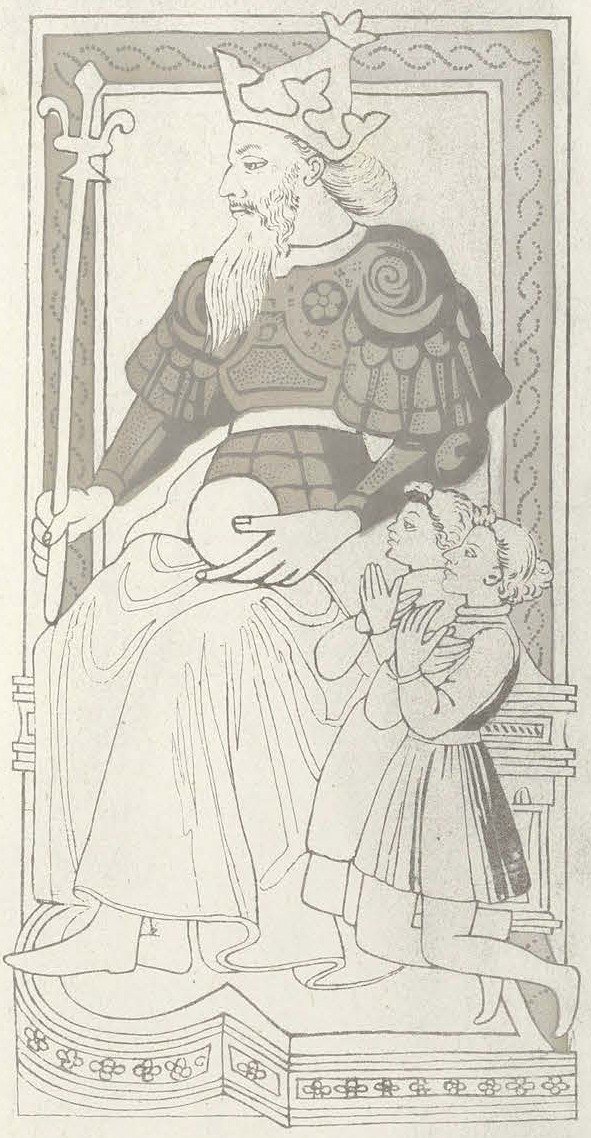 4 — The Emperorthe card itself at the BnF
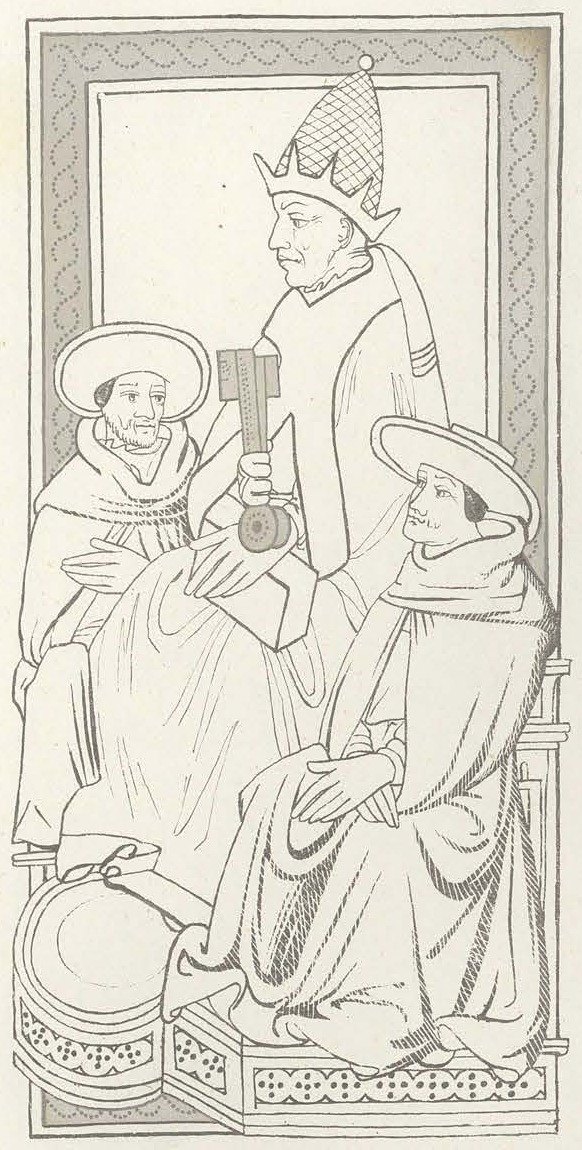 5 — The Popethe card itself at the BnF
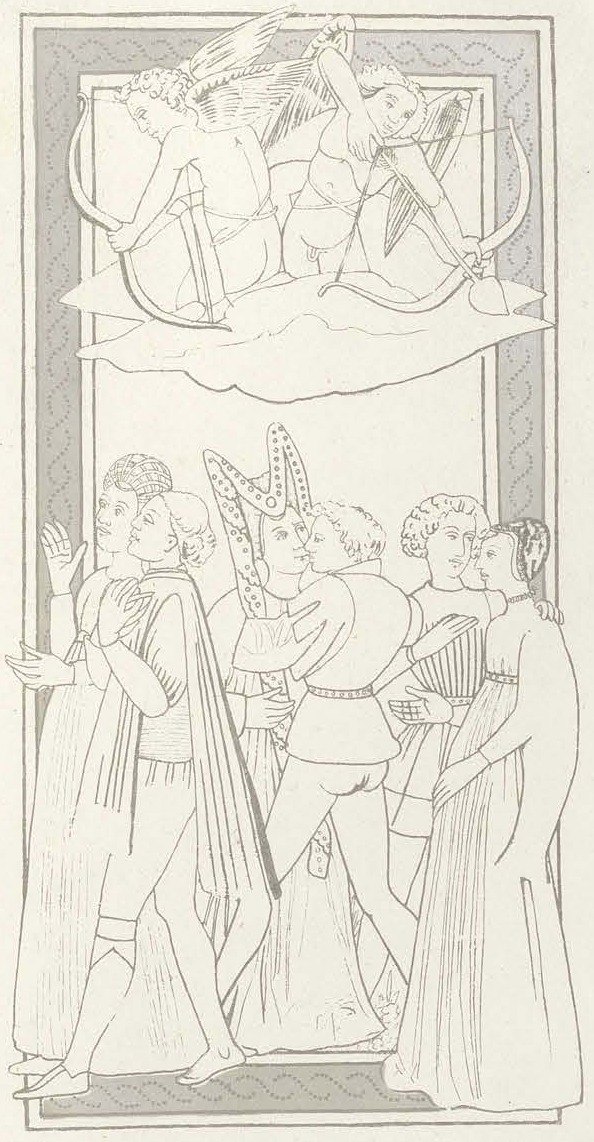 6 — The Loversthe card itself at the BnF
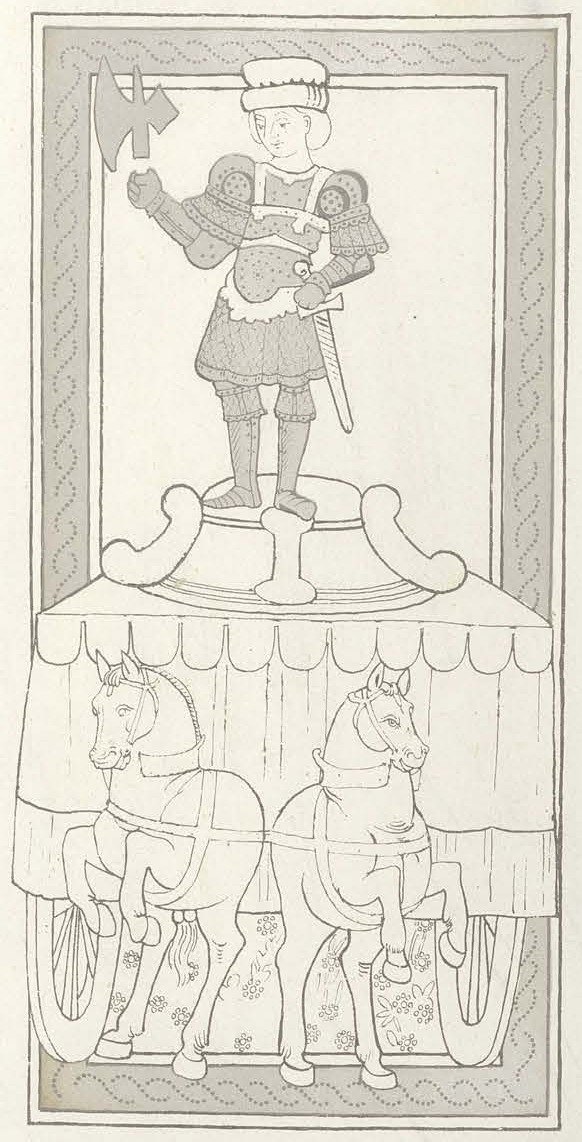 7 — The Chariotthe card itself at the BnF
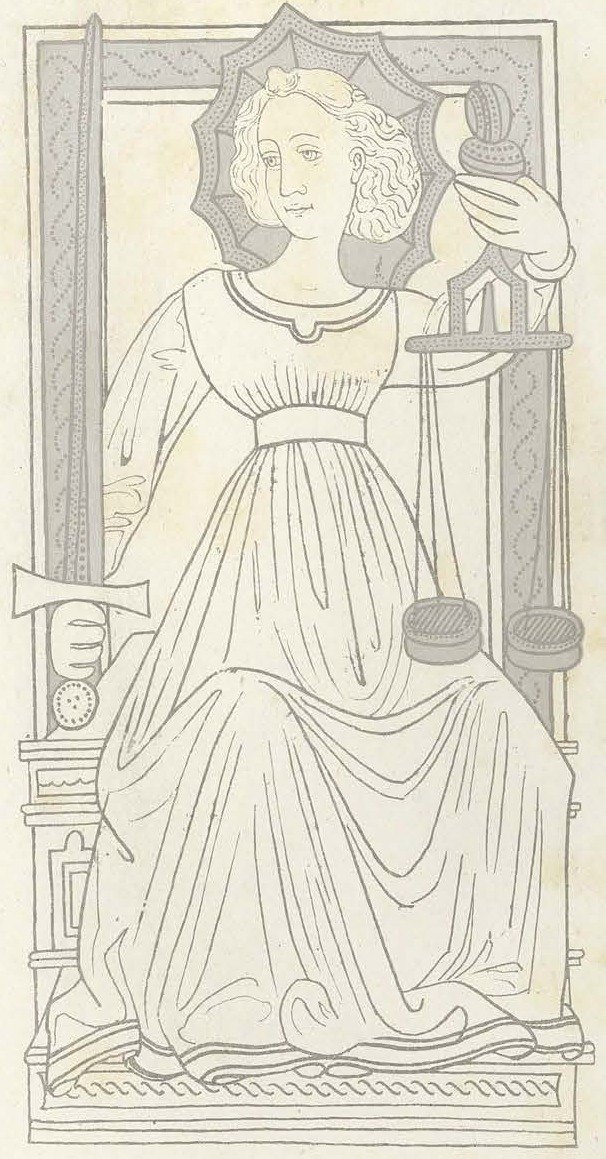 8 — Justicethe card itself at the BnF
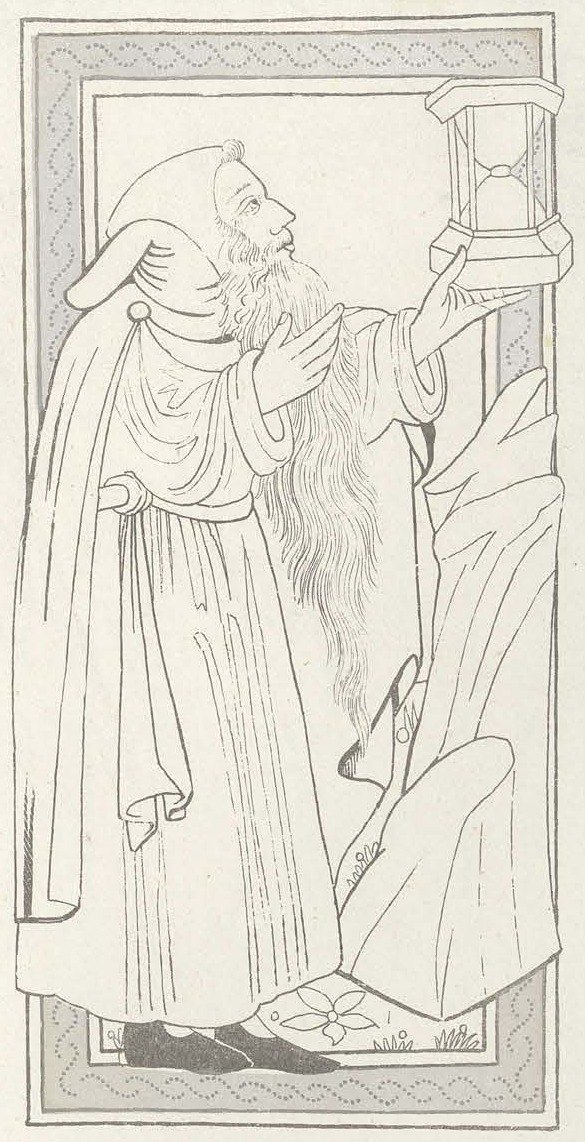 9 — The Hermit (Time)the card itself at the BnF
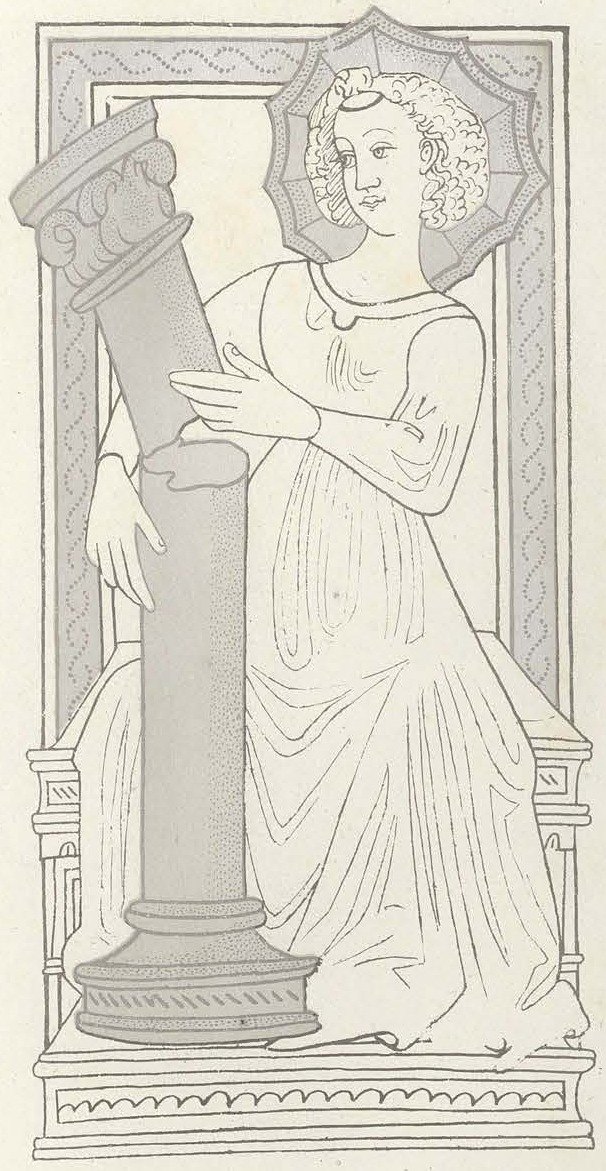 11 — Strengththe card itself at the BnF
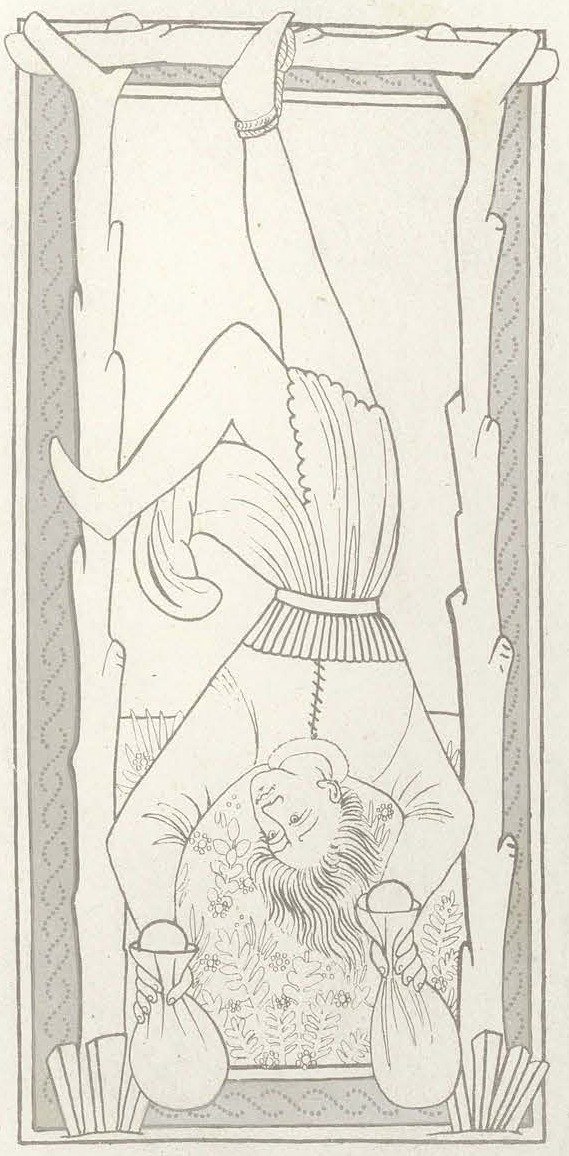 12 — The Hanged Manthe card itself at the BnF
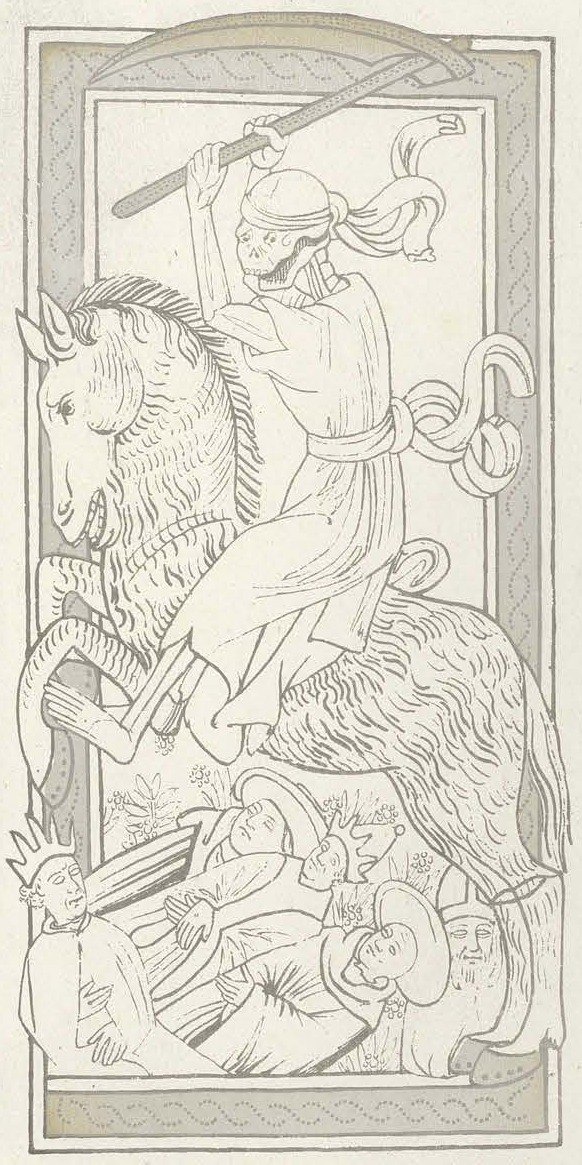 13 — Deaththe card itself at the BnF
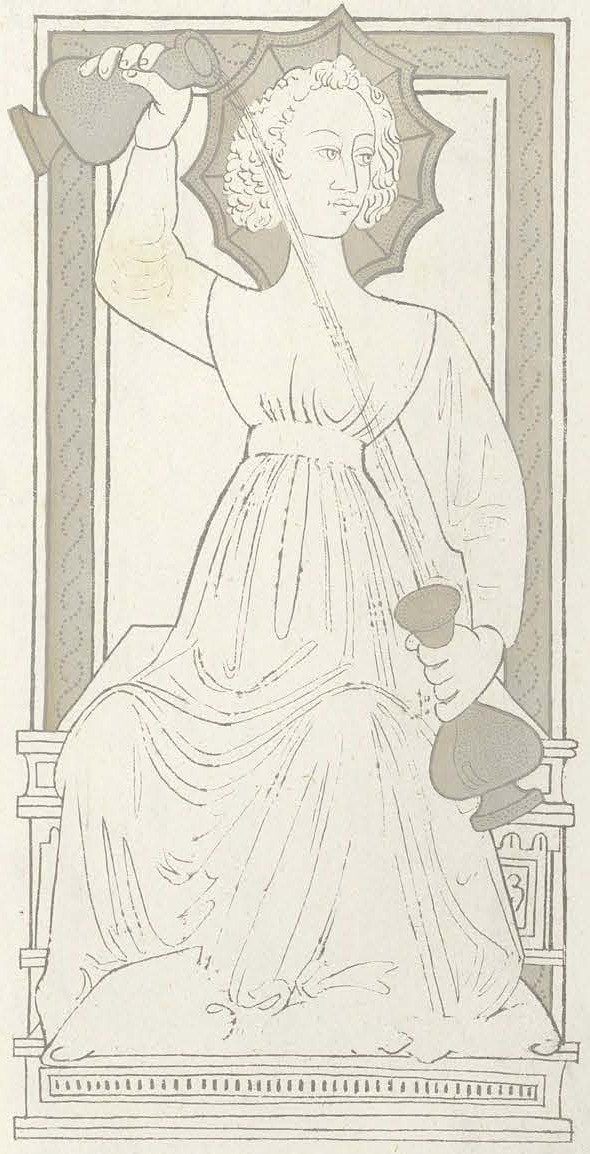 14 — Temperancethe card itself at the BnF
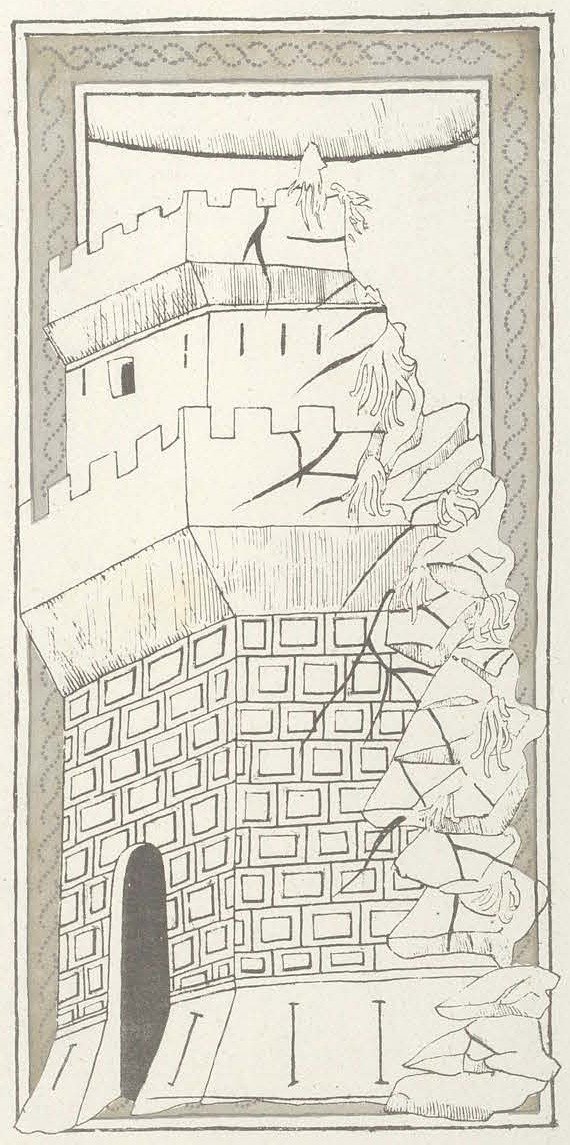 16 — The Tower (House of the Devil)the card itself at the BnF
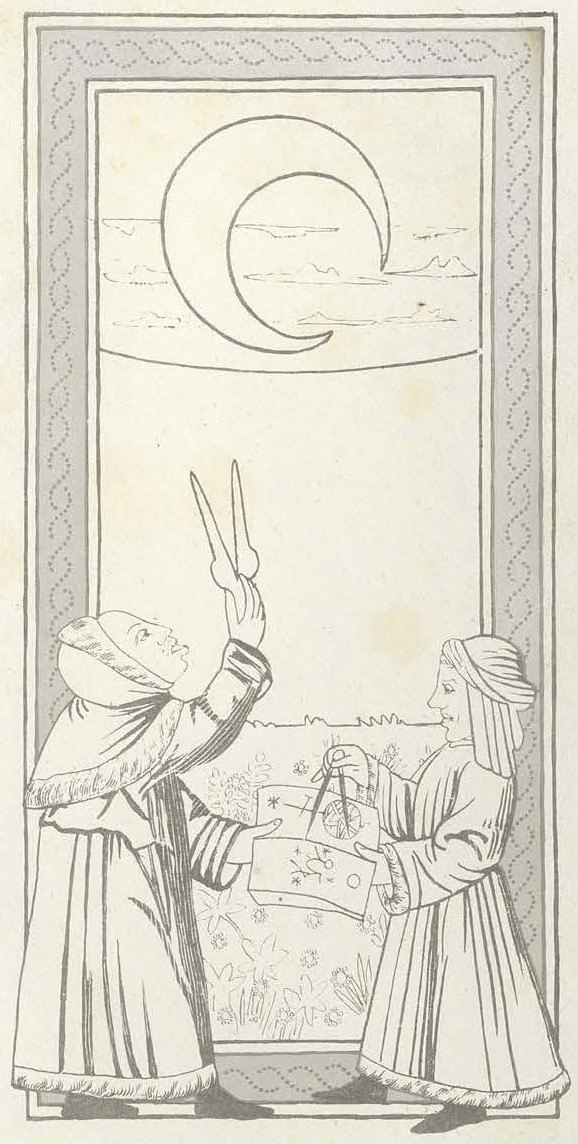 18 — The Moonthe card itself at the BnF
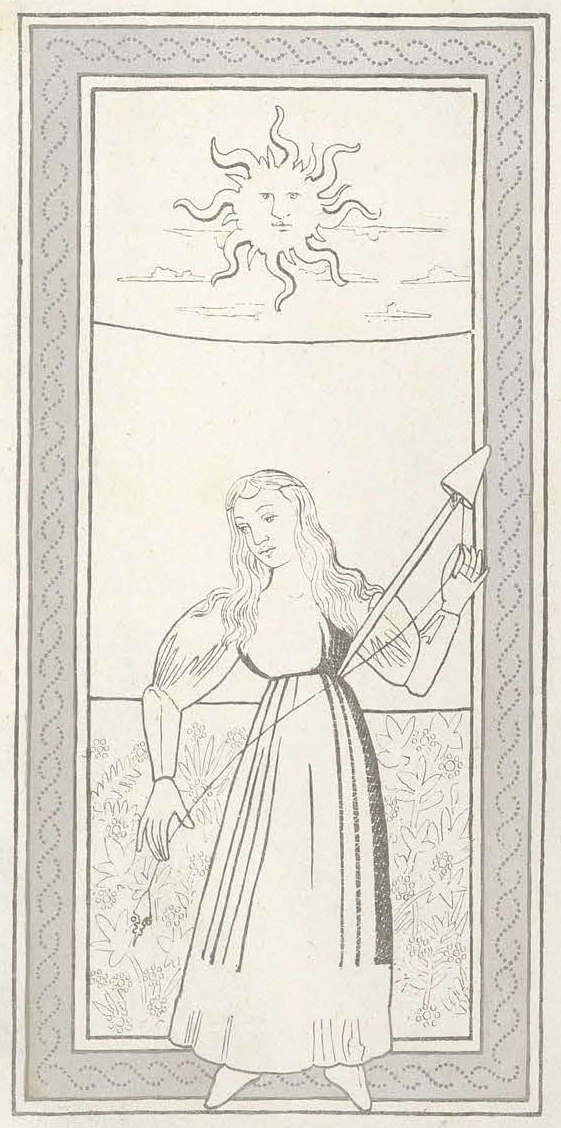 19 — The Sunthe card itself at the BnF
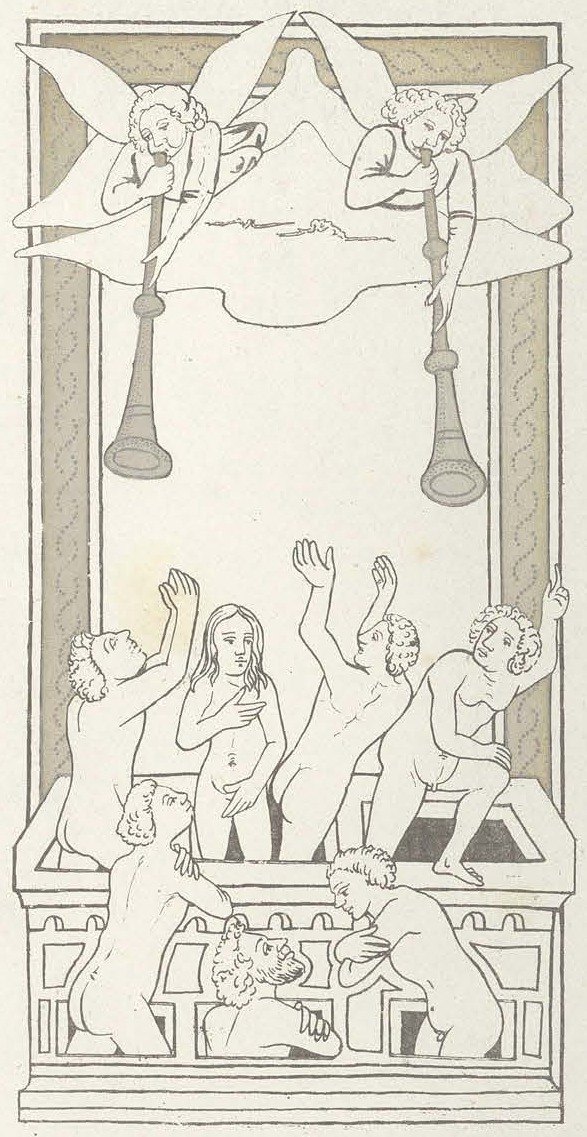 20 — Judgementthe card itself at the BnF
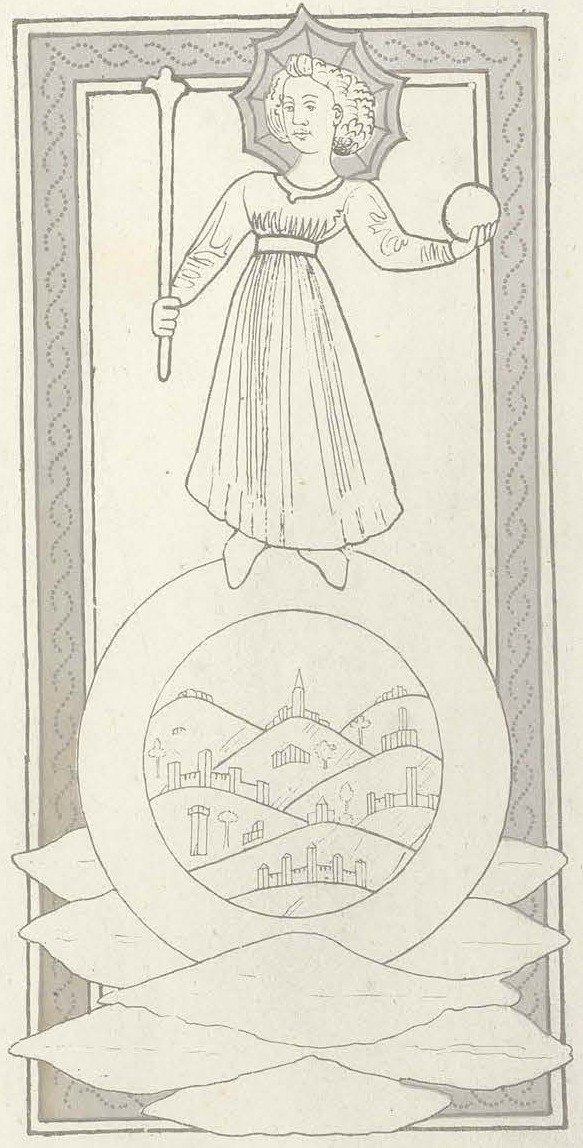 21 — The Worldthe card itself at the BnF
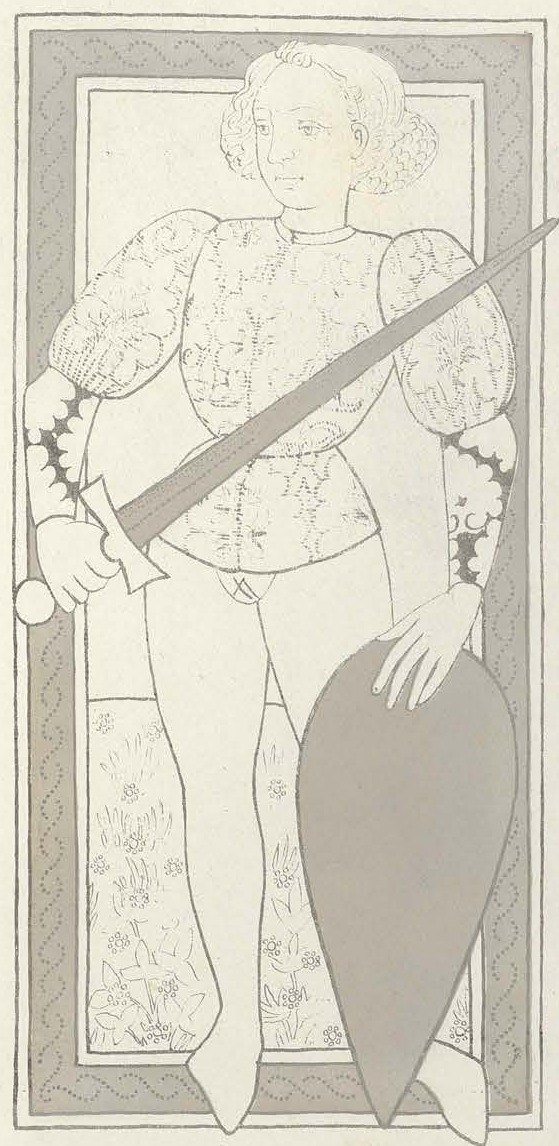 Page of Swordsthe card itself at the BnF
Sources and credits
These pictures are 1844 lithographic copies of the cards, not photographs of the cards. Drawn in line after the originals for Jeux de cartes tarots et de cartes numérales du quatorzième au dix-huitième siècle (Société des bibliophiles français, Paris: Crapelet, 1844), plates 2 to 18; scanned from the copy at the Université de Liège, Réseau des Bibliothèques (DONum), XIX.052.005 (hdl.handle.net/2268.1/15344, filed public domain). Each card links to the original at the Bibliothèque nationale de France, Paris (Cabinet des Estampes), on Gallica.
- North Italian (Ferrarese?) workshop (c. 1450–1480): Painter of the 'Charles VI' / Gringonneur tarot
- Bibliothèque nationale de France (holding institution): Holds the 17 surviving cards (Cabinet des Estampes)
- Société des bibliophiles français (1844): Lithographs after the cards (plates 2-18); copy at the Université de Liège (DONum), public domain
- PlayfulProcess (2026): Grammar architecture and summaries
Research dossier: research/decks/charles-vi-tarot.md. Data: tarot/charles-vi-tarot/grammar.json, CC-BY-SA-4.0. Images keep their own licences (hover a card for its credit).