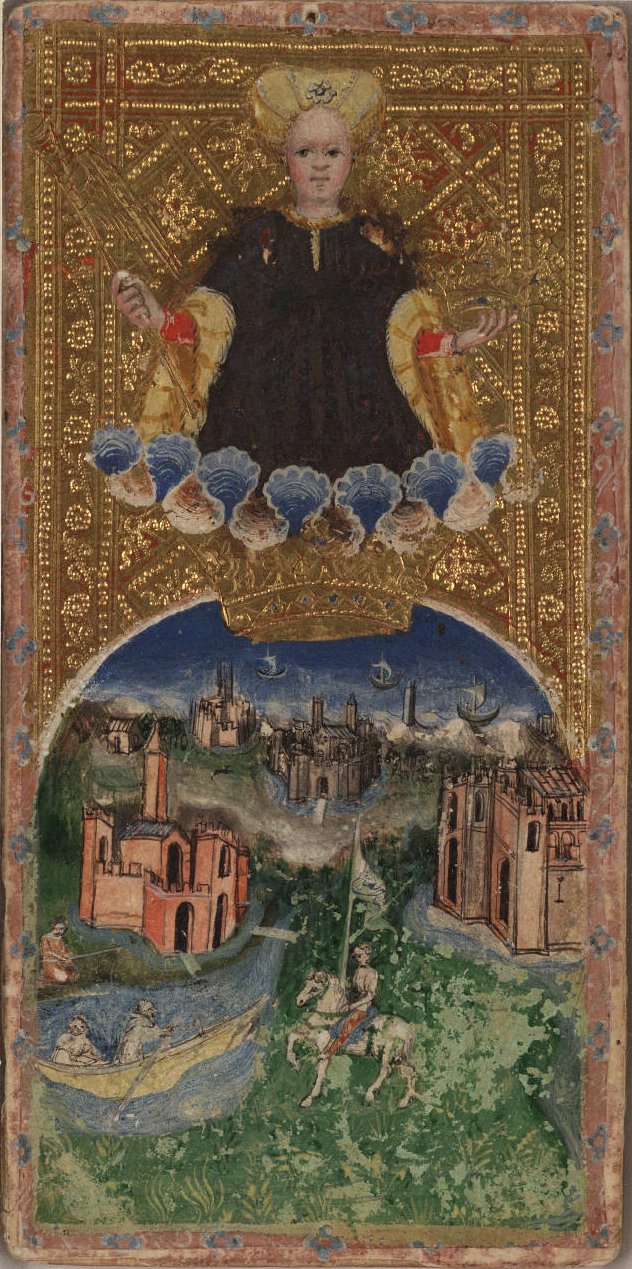
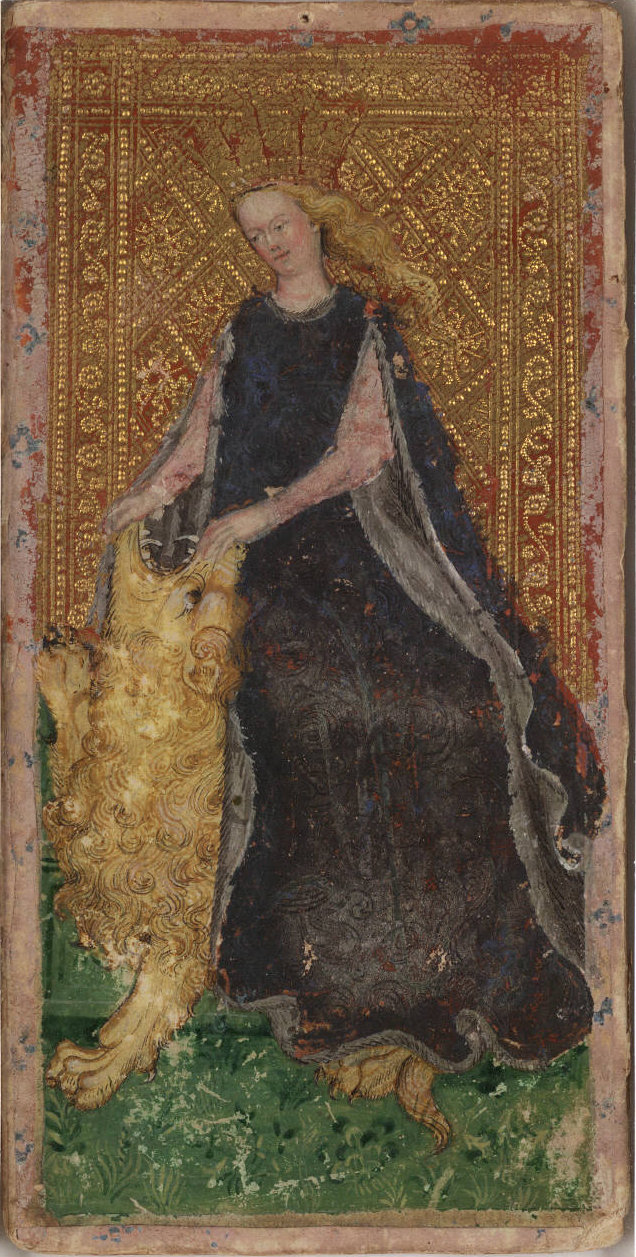
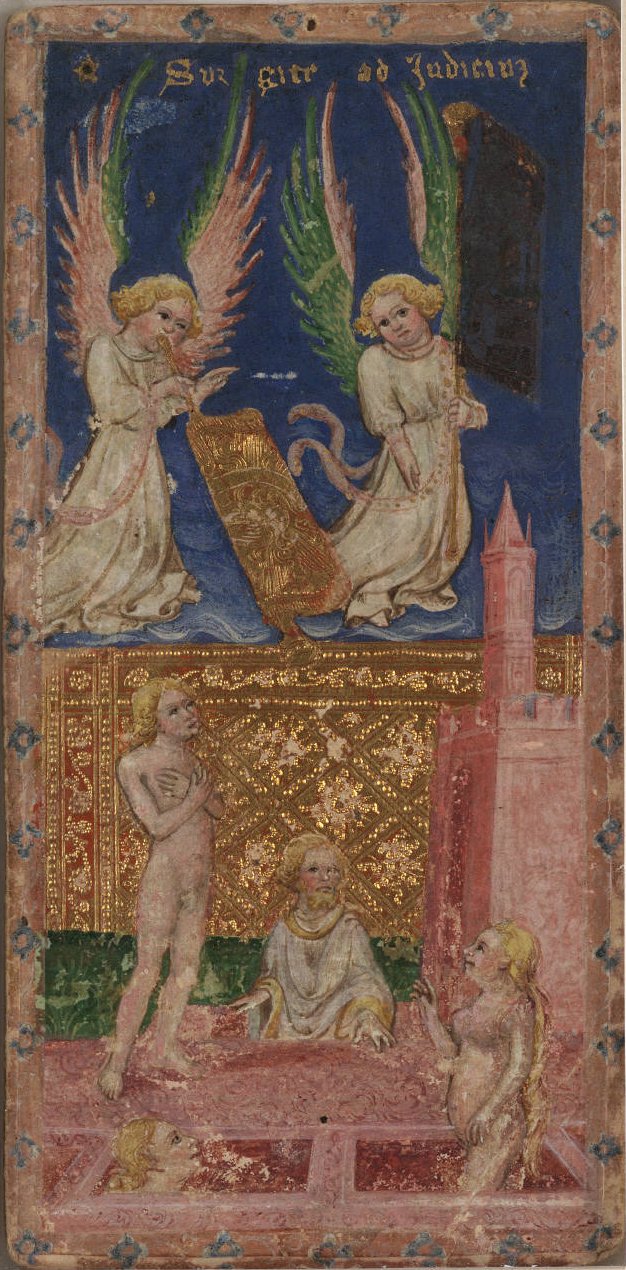
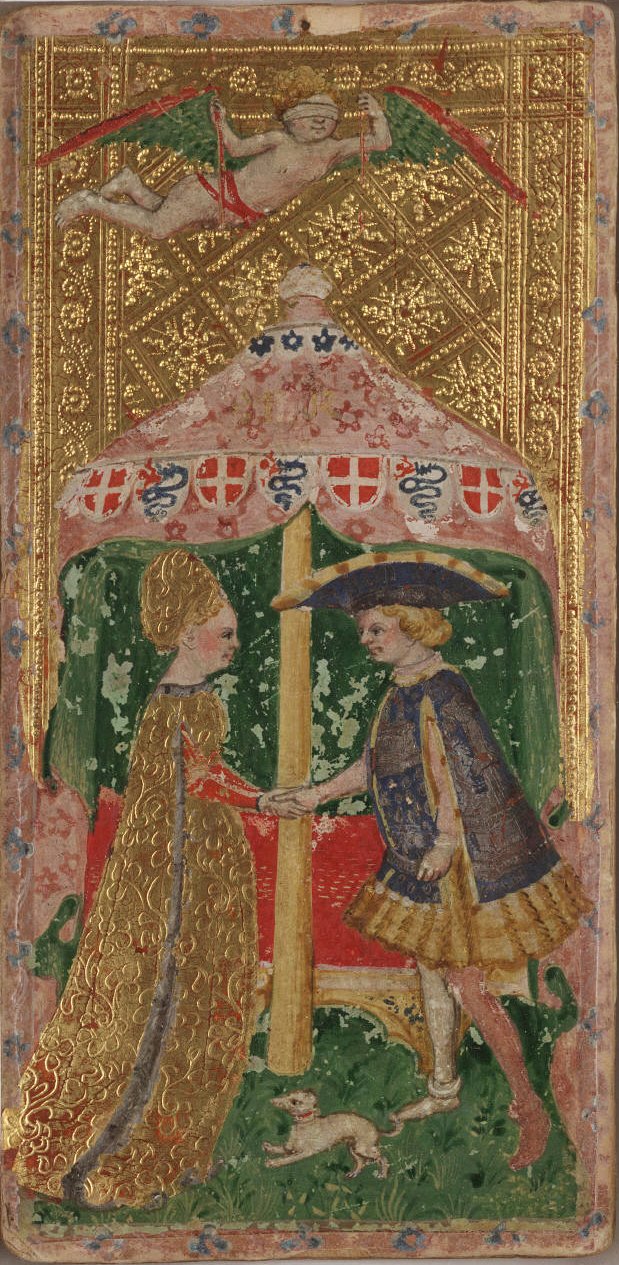
Il Mondo (The World), Visconti-Sforza tarot, Milan, c. 1450
Il Mondo · Visconti-Sforza · Milan, c. 1450

The Recursive Tarot

How a card game became a grammar for meaning — six centuries of historical decks, every image public domain.

A free, public-domain library of historical tarot — from the 1440s Milanese card game, through the printed Tarot de Marseille, to the 1781 occult reframing that invented divination. Each deck kept in its own tradition; every file open and forkable.

Read · for those with a taste for history

The illustrated history

Six centuries, from a 1440s card game to the occult reinvention of 1781 — an illustrated course, a timeline and a family tree, and every surviving deck read closely, image by image.

Play · for game & fiction lovers

Play the games

The trick-taking games these cards were for three centuries — or draw a spread and read it as fiction. Either way you're what Tolkien called a sub-creator: a maker of worlds you enter with your judgment intact, never a fate you obey.

Contribute · for keepers of the commons

Add to the open library

Every deck is public-domain JSON anyone can correct, translate, or extend. Climb in by the gentlest route.

How to hold the cards

One faculty, three stances — across six centuries · tap a card

This site teaches the third — and keeps the first. Why a card held as a gate is practice for a world full of oracles is in Intention Setting.

The short version

A game first, a gate later

Tarot began as a card game in 1440s northern Italy — extra trump cards (trionfi) added to an ordinary four-suit pack imported from the Islamic world. For three centuries it was played, not read. Only in 1781 did Antoine Court de Gébelin claim the cards held lost Egyptian wisdom, and Etteilla turned that claim into a cartomancy business. The "ancient esoteric tarot" is itself an 18th-century invention — which makes it no less interesting, only younger than it pretends.

Some traditions hold that an older, hidden esoteric tarot existed before the written record. We can't disprove that — but this project follows the cautious, evidence-first path of historians and primary sources: where the documents are silent, we don't fill the gap with speculation. Read the full illustrated history →

Corrected

Common misconceptions